Difficult-to-treat RA
KINERET for difficult-to-treat RA
Why some RA patients don’t respond to conventional therapies
If your patient has tried and failed multiple RA treatments, their disease may be driven by autoinflammation.1,2

Difficult-to-treat RA

“Before KINERET, I tried many different treatments to get my symptoms under control, but many of them didn't work for me.” —Peggy, RA patient
Individuals featured in this material have experience with KINERET and may no longer be on treatment.
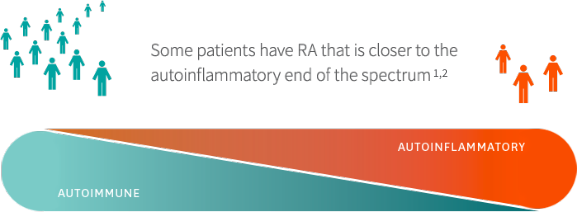
RA exists along a spectrum
Though RA is primarily defined as an autoimmune disease, the distinction between autoimmune and autoinflammatory disease isn’t clear. Because there are various interactions and similarities between the innate and adaptive immune systems, they may be viewed as 2 ends of the same spectrum.1,2 Some patients have RA that is closer to the autoinflammatory end of that spectrum1
Where does your patient’s RA fall?
Understanding which end of the spectrum your patient’s disease leans toward can be challenging, but there are key clues to watch for. Along with treatment history, you may want to consider any elevated acute-phase reactants and extraarticular signs of inflammation, including:
- Fever3,4
- Rash1
- Fatigue3,4
- Muscle weakness4
- Keratoconjunctivitis sicca (dry eye)4

“I spent 2 years trying and failing multiple RA drugs, never knowing which drug might treat some symptoms but exacerbate others...I began to feel that my rheumatologist and I were firing shots into the air and hoping we hit something.”—Megan, RA patient
Individuals featured in this material have experience with KINERET and may no longer be on treatment.
Steroid resistance can be a telling clue
Since RA is typically considered an autoimmune disease, therapies targeting the adaptive immune system (like steroids) are often prescribed. But autoinflammatory disease isn’t usually well controlled by these types of therapies.3 There may be several factors at play, including:


The overexpression of
cytokines that suppress
steroid sensitivity5
Dysregulation of
steroid receptors5
The signaling of
inflammatory pathways5
Genetic
mutations5
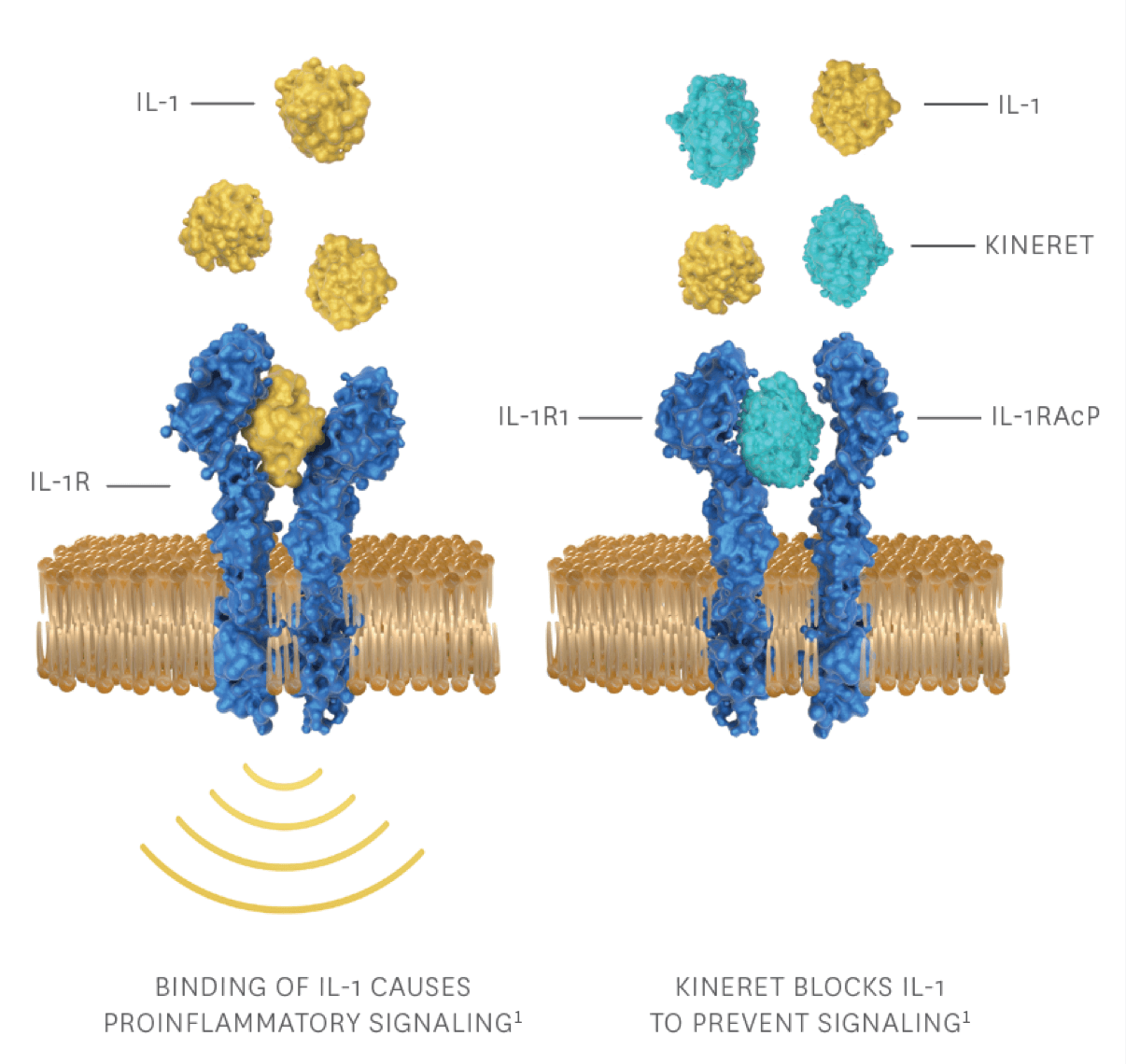
KINERET is a very specific treatment for a very specific RA patient
RA that is primarily autoinflammatory may be mediated by interleukin-1 (IL-1), cytokines produced by cells in the innate immune system.6 KINERET is an IL-1 receptor antagonist, blocking an underlying cause of inflammation in difficult-to-treat RA.7